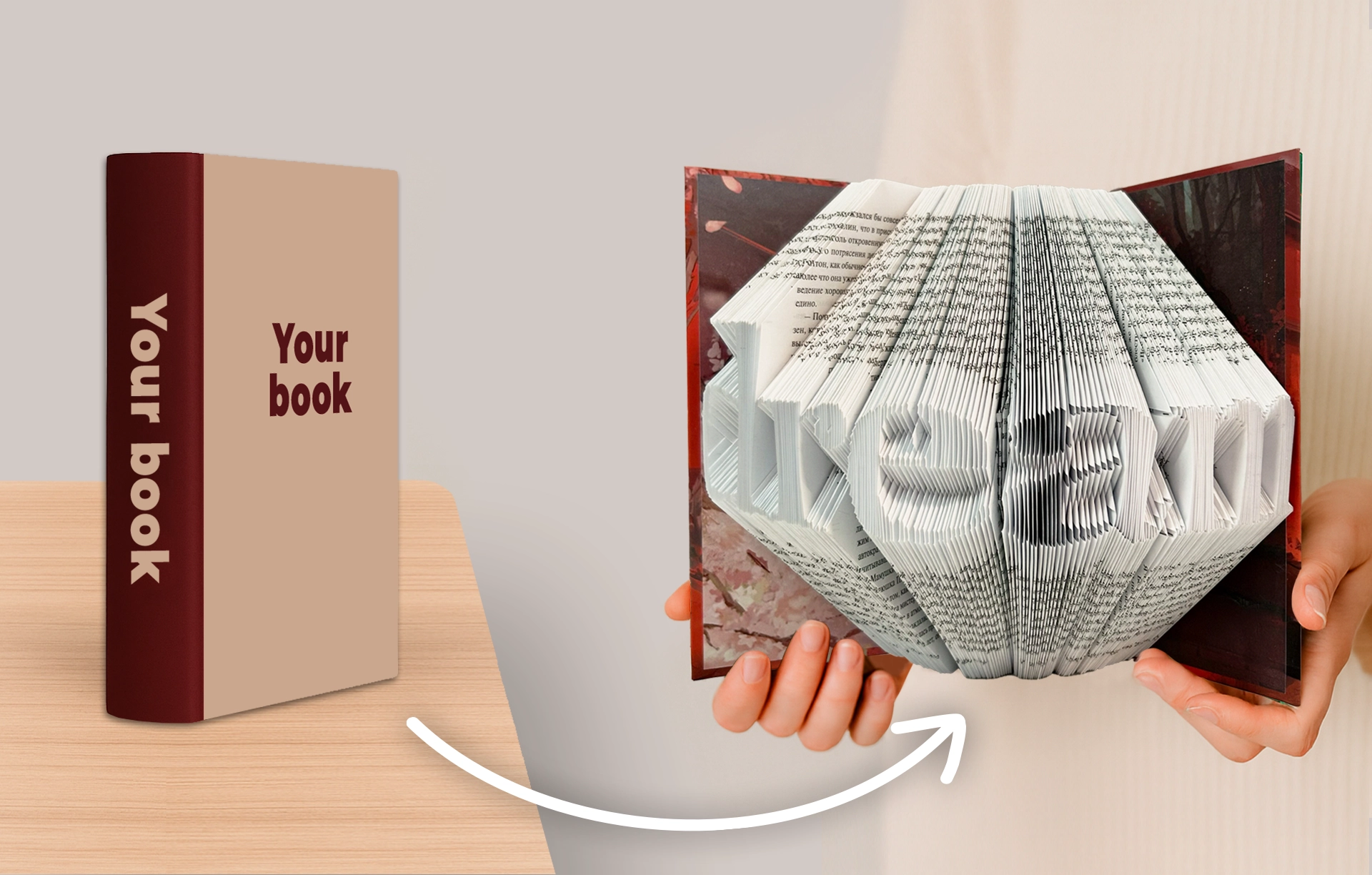
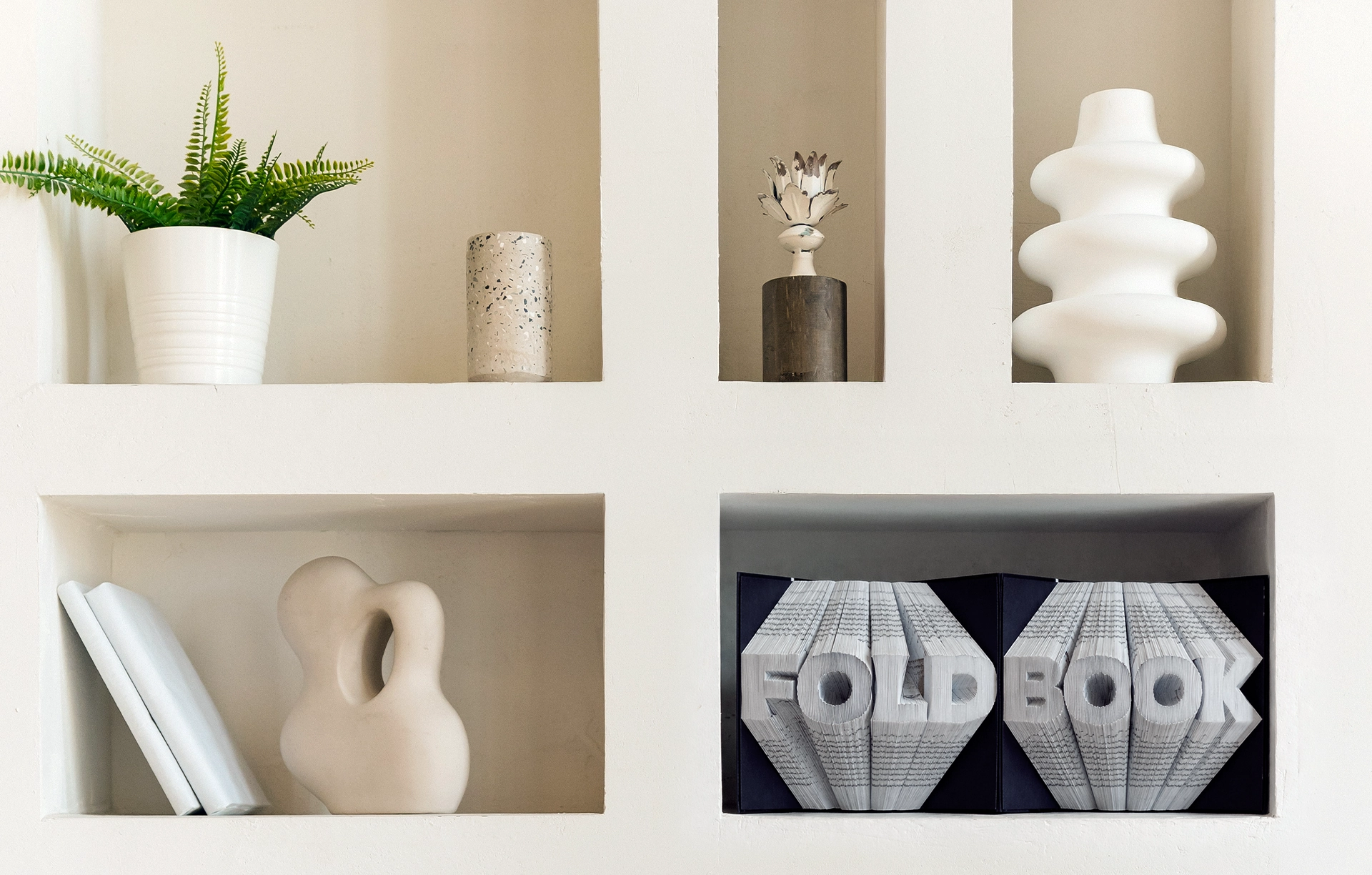
Book page folding is an original and creative way to turn an unwanted book into a paper art object. This craft direction, known worldwide as book folding or bukfolding, involves carefully folding each page—halving them or at angles—following a step-by-step pattern so that the book’s edge reveals a 3D image, letter, flower, or meaningful symbol.
The process requires no cutting, gluing, or complex tools—just an old book, a ruler, a pencil, and the desire to create something beautiful with your own hands. Book folding crafts are perfect for home decor, classrooms, kids’ creativity, festive setups, and unique gifts.
What Is Book Art?
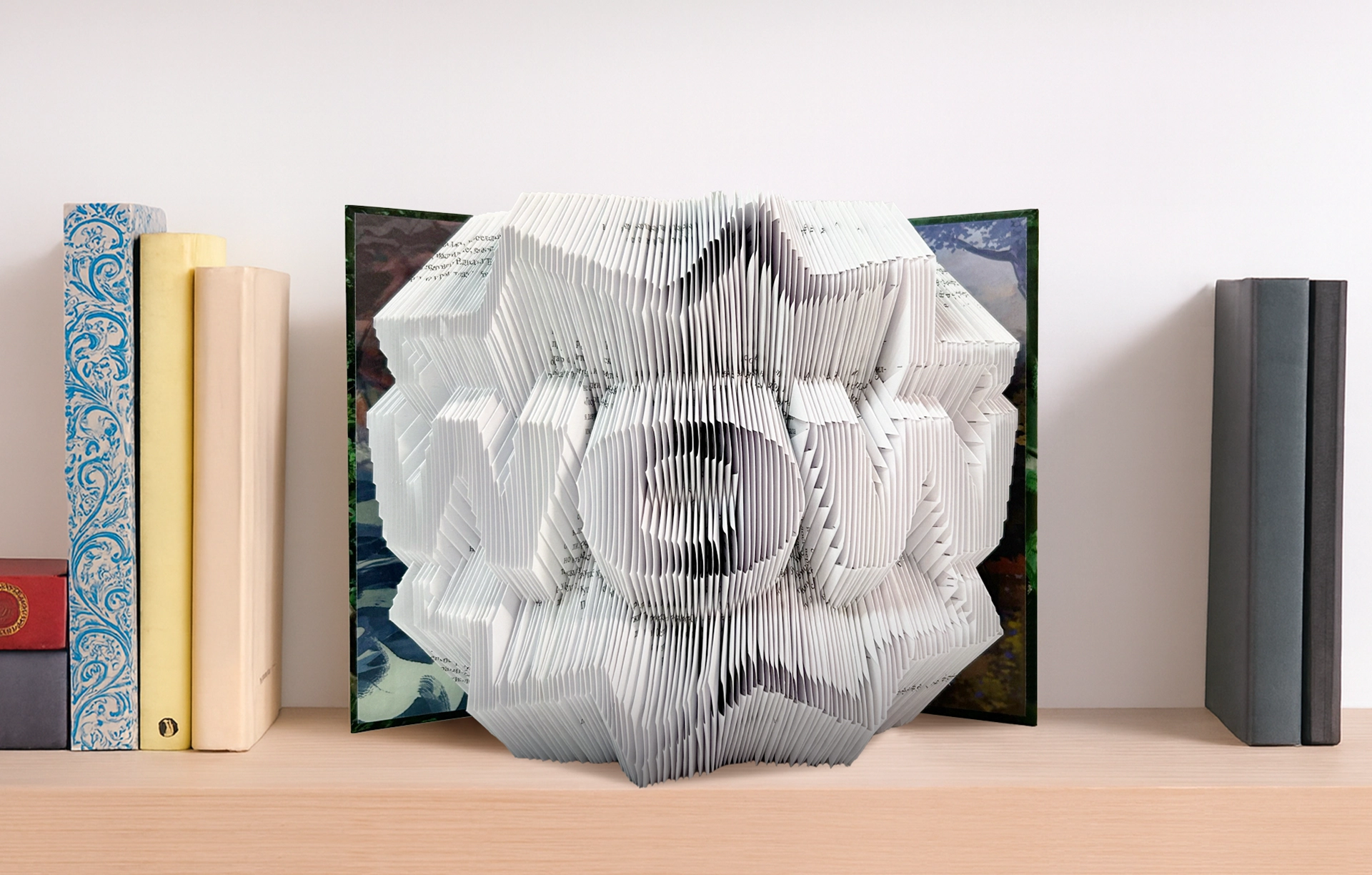
Book art is a modern direction where the paper block transforms into a decorative object. Book folding emerged in the early 2000s and quickly gained popularity because anyone can fold pages and achieve a striking result on their first try.
Unlike origami or quilling, which use individual sheets, this technique works with a whole book. Page folding follows a pattern (templates, PDFs) specifying which side, height, and angle to fold each page.
Today, book folding is thriving:
- Masters create art pieces for interiors
- Artists incorporate it into installations
- Works are sold via online stores, catalogs, and marketplaces
- Thousands of photos and videos appear on Pinterest, YouTube, and blogs
Tools for Book Folding
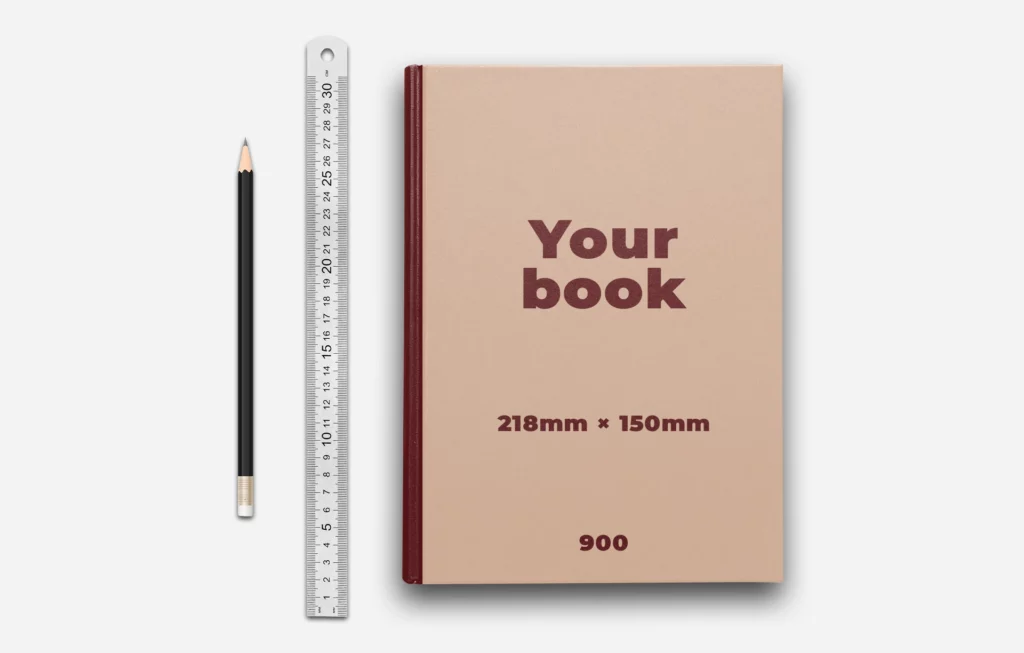
To make a book folding craft, you’ll need a minimal set:
- Hardcover book (300–1,999 pages)
- Ruler or PDF template
- Pencil for marking
- Good lighting
Cardboard, glue, and scissors aren’t required—this is pure folding, without altering the book’s structure.
Book Page Folding for Beginners
Level 1 — Simple Shapes
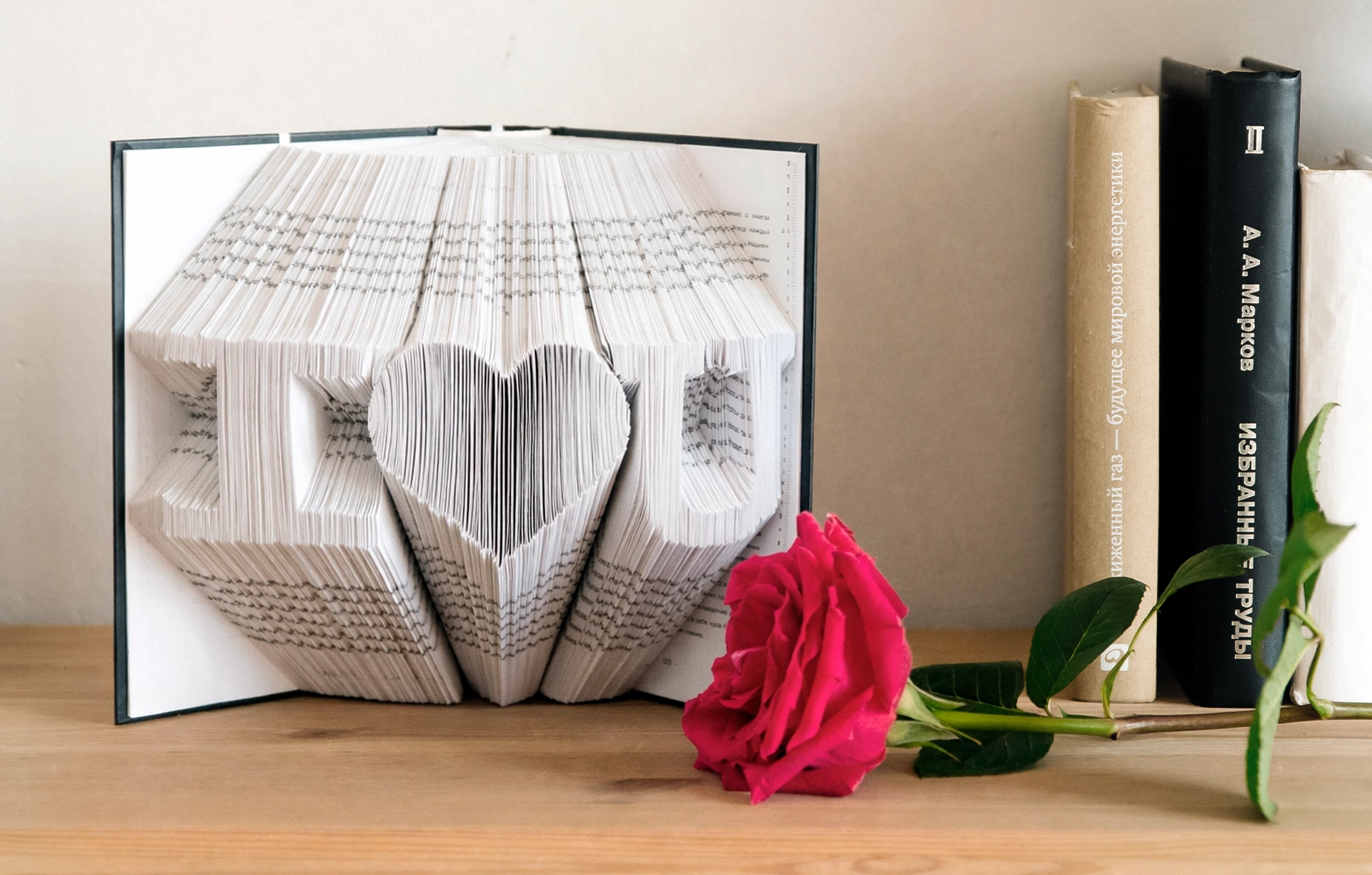
Start with easy options: heart, star, Christmas tree, or a single letter. Ideal for kids, school projects, or your first attempt. With 300–400 pages, the result will show clearly on the edge.
Level 2 — Words and Inscriptions
Next, try 3–5 letter words: Love, Home, a name, initials, or date. Strictly follow the template, don’t skip steps, and keep pages in order. Average time: 2–3 hours, depending on book size.
Level 3 — Complex Compositions
For experienced makers:
- Geometric patterns
- Animal silhouettes
- Logos
- Decorative ornaments
These book folding crafts look like true masterpieces, not just homemade items.
Creative Ideas and Inspiration
Book page folding lets you create:
- Holiday decor (Christmas trees, snowflakes)
- Baby birth gifts
- Wall, shelf, or library decorations
- Family keepsakes
Every piece is unique, shaped by the book’s history, paper color, sheet density, and spine condition.
Masters’ Tips for Book Folding
- Choose books with even pages
- Work in good light
- Check progress every 40–50 pages
- Take breaks—the technique is repetitive
- Use online template generators—they’re fast, precise, and convenient
Common Mistakes in Page Folding
| Mistake | Cause | Solution |
| Uneven folds | No marking or rushing | Always mark points with pencil and use a ruler |
| Pattern shift | Page numbering error | Verify page number matches template line |
| Torn pages | Rough handling | Fold gently, especially on thin paper |
| Blurry outline | Wrong template for book | Use a generator with your book’s exact specs |
| Quick fatigue | Bad posture or long sessions | Set up a comfy workspace and take breaks |
Community and Technique Evolution
Book folding now has a vibrant community: forums, blogs, online classes, free and paid PDF templates, patterns, exhibitions, and contests. New techniques emerge, like 3D effects, modular folding, and decor combos.

Ready to Try?
If you’ve wanted to turn an old book into an art object, enjoy the process, and create something amazing—book page folding is perfect. Start with a simple shape, follow the step-by-step guide, and watch a plain paper block become a work of art.

